The Wizard of Oz in Easy Korean: Part 2
Read Part 2 of The Wizard of Oz in easy Korean and meet the Tin Woodman and the Lion. With pictures, English translations, and a free story PDF.

Delicious Korean
57 views
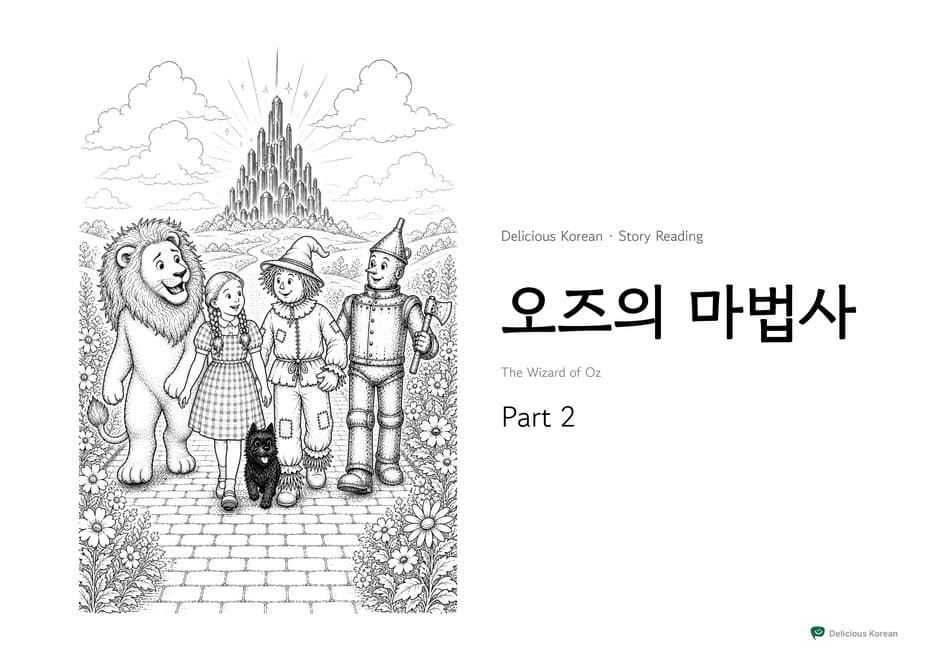
Back to Oz for Part 2!
Welcome back! Dorothy, Toto, and the Scarecrow are still on the road, and things get more exciting. In Part 2, they meet two new friends: a Tin Woodman who wants a heart and a Lion who thinks he has no courage. There’s a scare, a few tears, and a happy moment when everyone sets off together. New to the story? Start with Part 1, then come back here.
How to learn Korean with this story
Use this story for Korean reading and listening practice. You don’t need to understand every word. Just follow the pictures, listen, and enjoy the story!
- 01
Watch and listen first
Follow Dorothy as she meets the Tin Woodman and the Lion. Let the pictures show you what’s happening.
- 02
Read the Korean out loud
Read along with the video. Start with short lines like “도로시, 어디 가요?” and copy the rhythm.
- 03
Try using a new expression
Take 울어요 and change who is crying: 사자가 울어요 → 아기가 울어요.
Korean reading practice: Two scenes
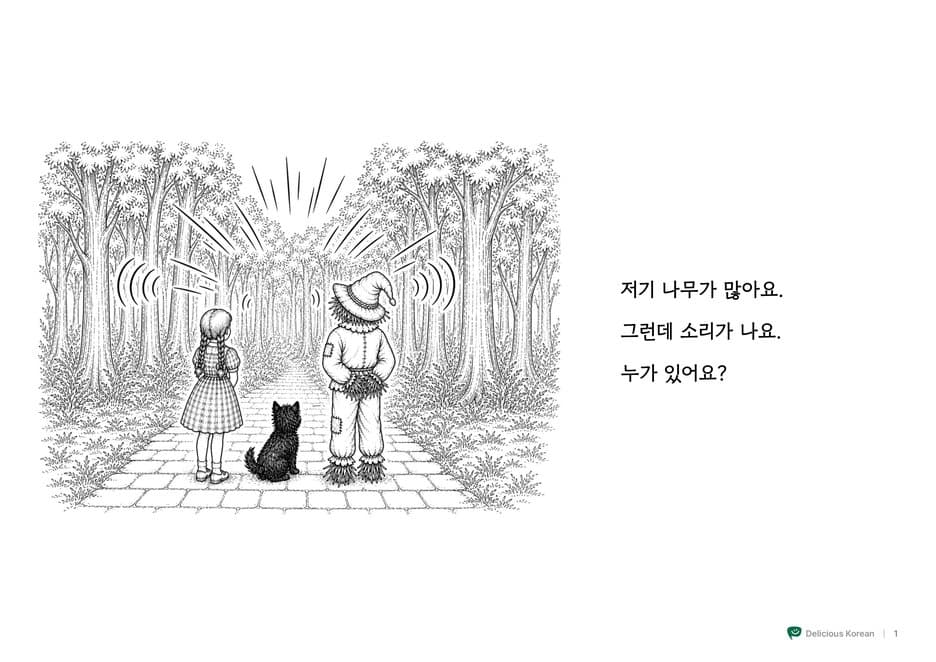
Ready to try reading Korean? Here are two scenes from our Wizard of Oz Story Pack. Look at the pictures, read the Korean sentences, and see how much you can understand. Curious how it sounds? Play the video above and read along with it.
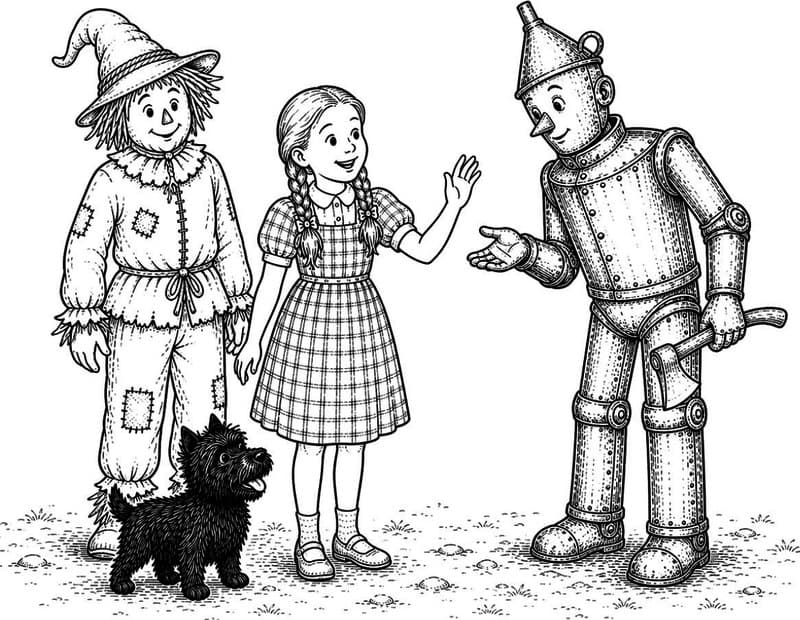
"안녕하세요! 저는 도로시예요."양철 나무꾼이 물어봐요."도로시, 어디 가요?"
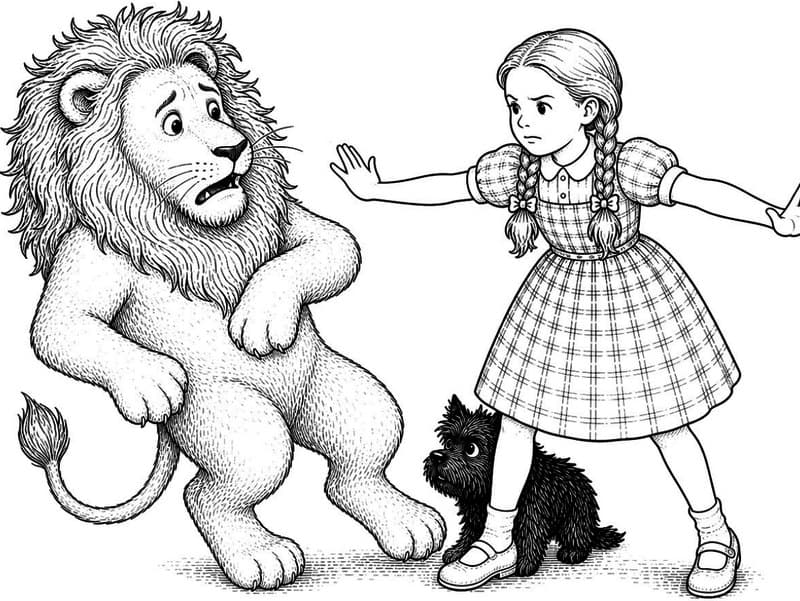
도로시가 토토 앞에 서요."안 돼요!"사자가 깜짝 놀라요.
Key Expressions from this story
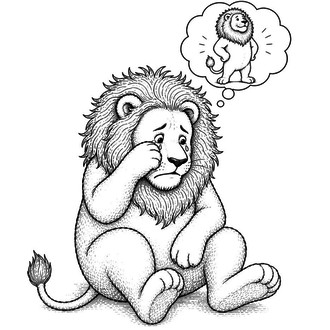
울어요
사자가 울어요.
Use it when someone is crying. Put who is crying first: 사자가 울어요.
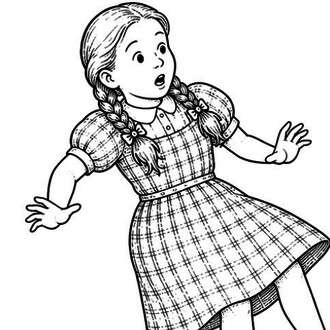
놀라요
도로시가 깜짝 놀라요.
Use it when someone is surprised or startled. Add 깜짝 to make it stronger.

가리켜요
양철 나무꾼이 가슴을 가리켜요.
Use it when someone points at something. Put the thing first: 가슴을 가리켜요.
Quick practice
사자가 . "저는 용기가 없어요."
사자가 깜짝 .
허수아비가 머리를 .
Why stories help you learn Korean
Reading Korean stories lets you practice words and sentence patterns in context. Instead of memorizing a list, you see each word in a scene, and it’s easier to remember.
In Part 2, you don’t need a dictionary for 울어요. You read 사자가 울어요 while the Lion wipes a tear, and the meaning is clear. When 울어요 comes back later in the story, you already know it.
This is called comprehensible input: learning through Korean you can understand with pictures, context, and repetition. You don’t have to understand every word. Just keep following the story.
Learning Korean with stories: FAQ
Is The Wizard of Oz Part 2 good for Korean beginners?
Yes. The sentences are short, the pictures show what’s happening, and the same expressions keep coming back, like 같이 가요 and 무서워요. New to the story? Start with Part 1, then come back to Part 2.
Why read a story you already know in Korean?
When you already know what happens, you don’t have to work out the plot. You can focus on the Korean instead. Guessing the meaning gets easier, and new words stick because they come with a scene you remember.
How should I read a Korean story as a beginner?
Read it once for the story, without stopping to look up every word. Then read it again and notice the expressions that keep coming back. Last, read it out loud. Short stories with pictures, like this one, work best when you’re starting out.
Get the free Story Pack
- The whole story, fully illustrated
- Key expressions from the video
- Practice activities with an answer key