Stone Soup in Easy Korean
The woman at the door says she has no potatoes. Take a look over her shoulder.

17 views
How to practice Korean reading with this story
You don’t need to understand every Korean word to enjoy this story. Start with the pictures, read the short Korean sentences, and see how much you can understand.
- 01
Start at the door
Cover the English and read the traveler’s question. If 감자 is new to you, the picture has a clue.
- 02
Give each person a voice
Read 감자 있어요? as the hungry traveler. Now try 아니요, 감자 없어요 as the woman who wants to keep her potatoes.
- 03
Ask for carrots
Suppose you need carrots for dinner. Keep the traveler’s question and swap in 당근: 당근 있어요?
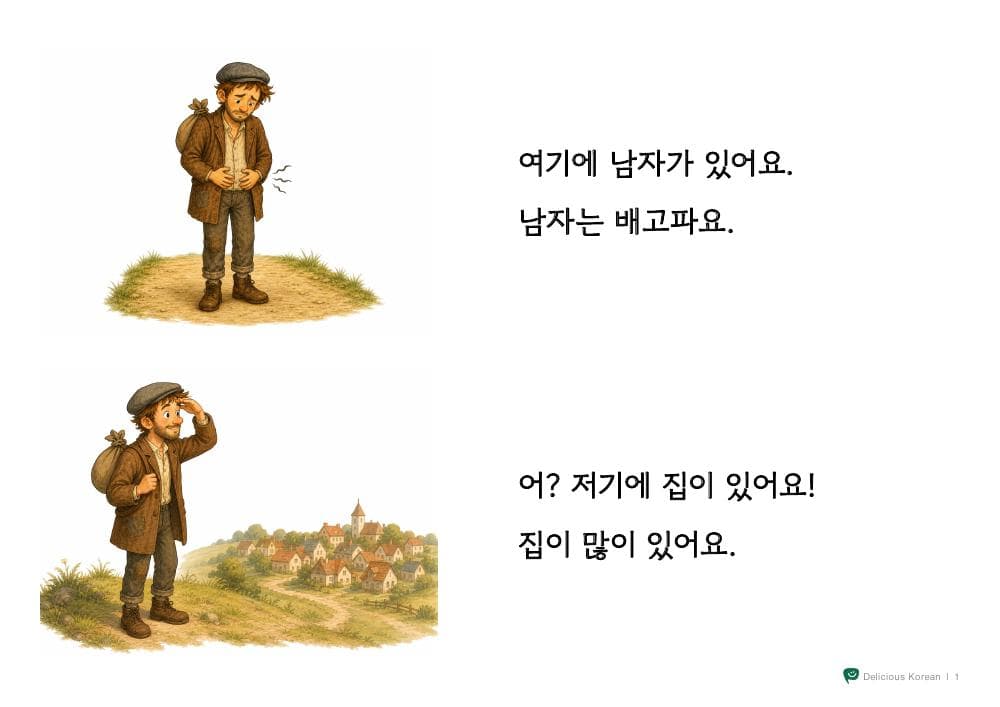
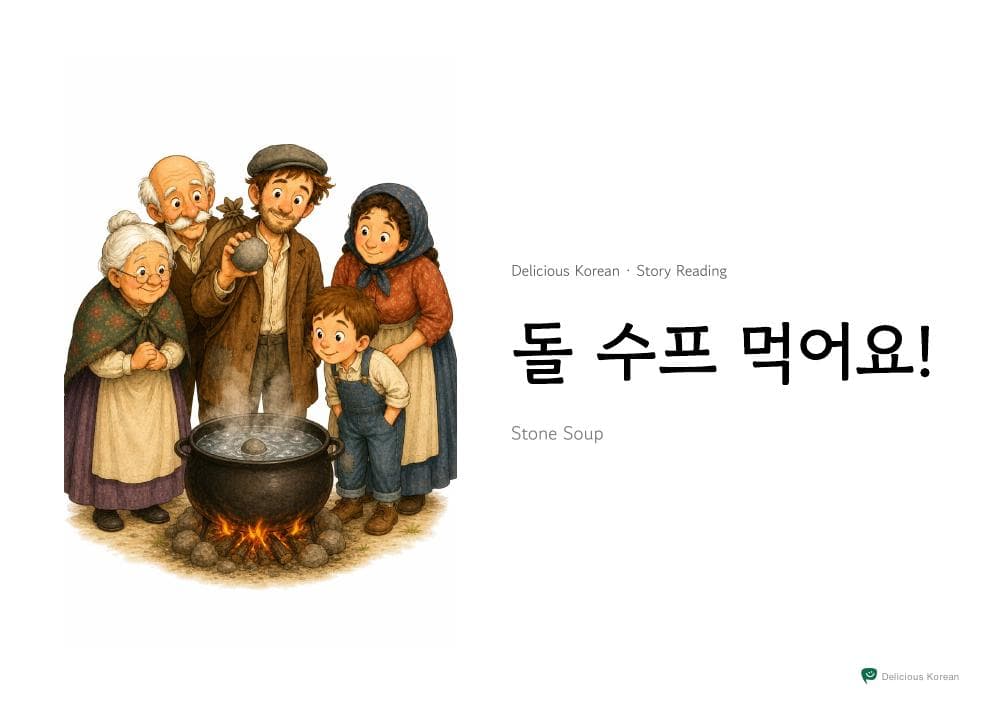
Korean reading practice: Two scenes
Here are two scenes from Stone Soup. Try reading them in Korean first. You can check the English translations whenever you need a little help. Curious how it sounds? Play the video above and read along with it.
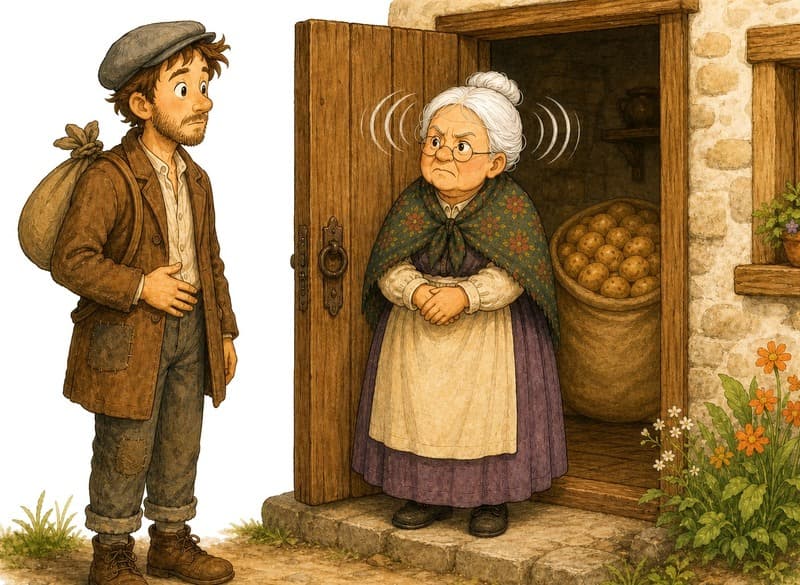
"할머니, 안녕하세요! 저 배고파요. 감자 있어요?""아니요, 감자 없어요."
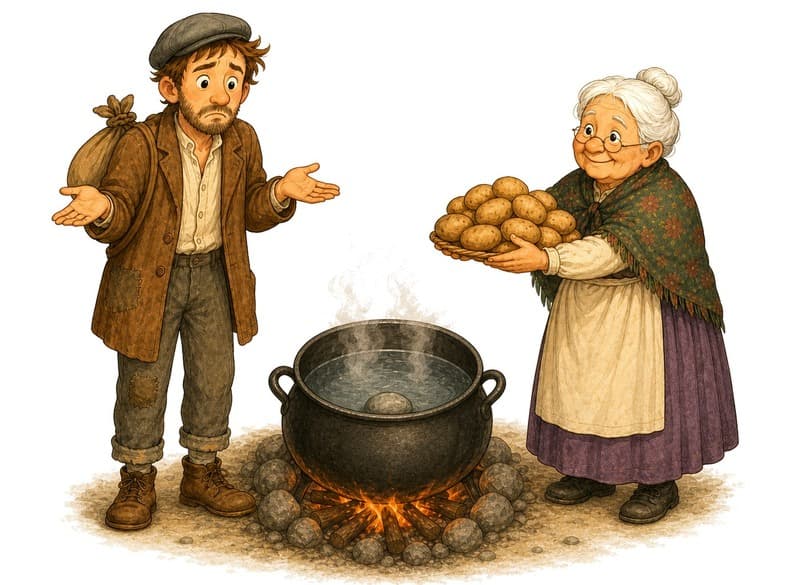
"음… 그런데 감자 없어요.""저는 감자 있어요! 여기요!"
Key Expressions from this story
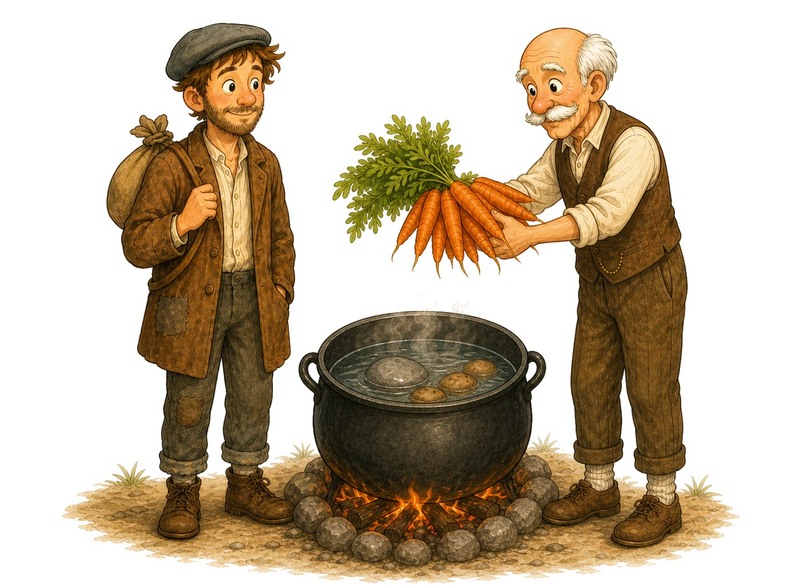
있어요
저는 당근 있어요! 여기요!
당근 있어요 can mean “I have carrots.” Lift your voice at the end and the same words become a question: “Do you have carrots?”
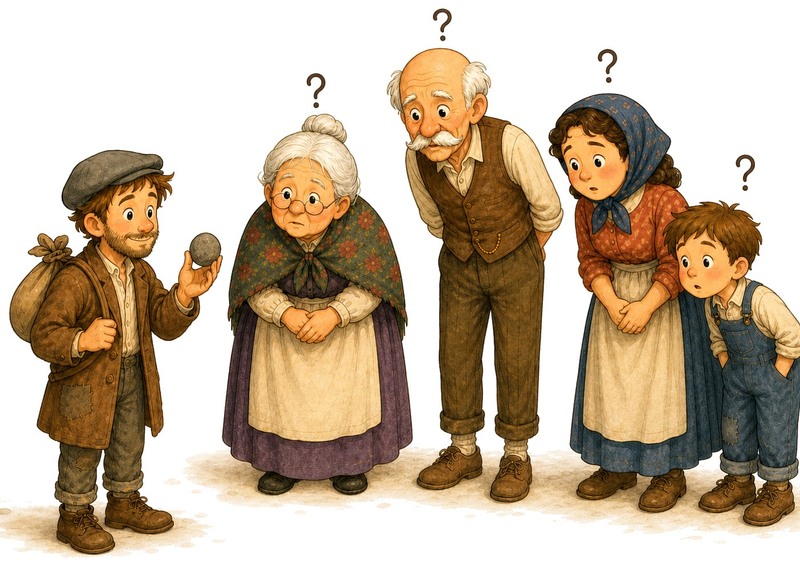
뭐예요?
돌 수프가 뭐예요?
A stone in a soup pot is a strange sight. The villagers ask 돌 수프가 뭐예요? (“What’s stone soup?”). You can point to a dish and ask 이거 뭐예요? (“What’s this?”).
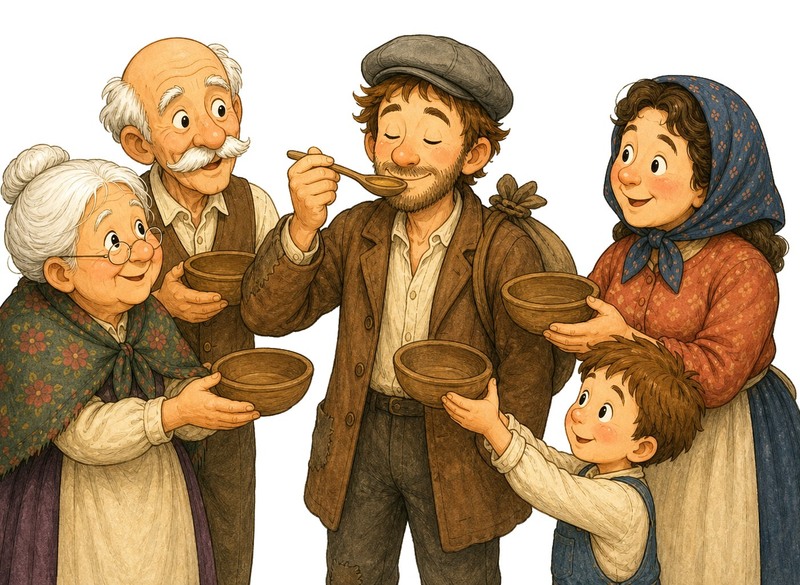
주세요
저도 주세요!
At the table, 저도 주세요! is “Some for me too, please!” 도 adds “too,” so 저도 means “me too.”
Quick practice
Look at each picture and choose the expression that fits.
저는 당근 ! 여기요!
돌 수프가 ?
저도 !
Why stories help you learn Korean
At the door, the traveler has to take the woman’s word for it. You get to see the potatoes. That makes 아니요, 감자 없어요 a fun line to read out loud. How convincing can you make her sound?
Later, she offers him those potatoes herself. Read the two scenes back to back and listen for the change from 없어요 to 있어요.
Get the free Story Pack
- The whole story, fully illustrated
- Key expressions from the video
- Practice activities with an answer key
Learning Korean with stories: FAQ
할머니 means “grandmother.” In Korean stories, a character can also use it to address an older woman. That’s why the traveler’s greeting here reads as “Hello, ma’am.”
The traveler calls 저기요! (“Excuse me!”) to get everyone’s attention. Later, the woman says 여기요! (“Here you go!”) as she hands him the potatoes. Try saying each line with the gesture that goes with it.
돌 is a stone, and 수프 is soup. After everyone’s had a bowl, the boy asks 그런데 돌 맛있어요? (“But does the stone taste good?”).