
Korean Words to Know 🇰🇷
📌 양력 (yangnyeok): "solar calendar"
The everyday calendar, the same one on your phone.📌 음력 (eumnyeok): "lunar calendar"
The traditional calendar that follows the moon.📌 설날 (seollal): "Lunar New Year"
📌 추석 (chuseok): often called "Korean Thanksgiving"
Here is something that surprises many Korean learners. Two of Korea's biggest holidays, 설날 (Seollal) and 추석 (Chuseok), fall on a different date every single year.
One year Chuseok lands in early October, the next it jumps back to late September. So what is going on? The short answer is that Korea quietly uses two calendars at the same time. 🌙☀️
Why Korea Uses Two Calendars
Most Korean holidays sit on a fixed date, just like the calendar you already use. New Year's Day is always January 1, and Children's Day (어린이날) is always May 5.
Alongside this everyday 양력 (solar calendar), Korea also keeps the 음력 (lunar calendar), an older system where each month follows the cycle of the moon. In Korea, everyday life follows the solar calendar, while several traditional holidays are still set by the lunar calendar.
The Holidays That Follow the Moon 🌙
설날 (Seollal), the Lunar New Year, falls on the first day of the first lunar month, and 추석 (Chuseok) falls on the fifteenth day of the eighth. On the traditional lunar calendar, these dates never change.
So Why Does the Date Keep Changing?
Here is the twist. A 12-month lunar year is about eleven days shorter than a solar year. To keep the calendar aligned with the seasons, Korea's traditional lunisolar calendar adds a leap month, called 윤달 (yundal), every few years.
So the lunar date stays the same, but its matching date on the solar calendar changes from year to year.
📅 Chuseok falls on October 6 in 2025, but on September 25 in 2026.
It is not that the holiday moves. It stays exactly where it is on the lunar calendar. Unlike a holiday that always lands on the "fourth Thursday" of a month, Seollal and Chuseok simply follow the moon.
What Koreans Actually Use Day to Day
For work, school, appointments, and the date on your phone, Koreans use the solar calendar, the very same one you already know. The lunar calendar mostly comes out for traditional holidays, ancestral rites, and some older family birthdays.
Whether a date comes from the solar or lunar calendar, Koreans read it in the same familiar year-month-day order. Once you can read these dates out loud, the whole system starts to feel much more familiar. 🇰🇷
Try Saying the Date Yourself
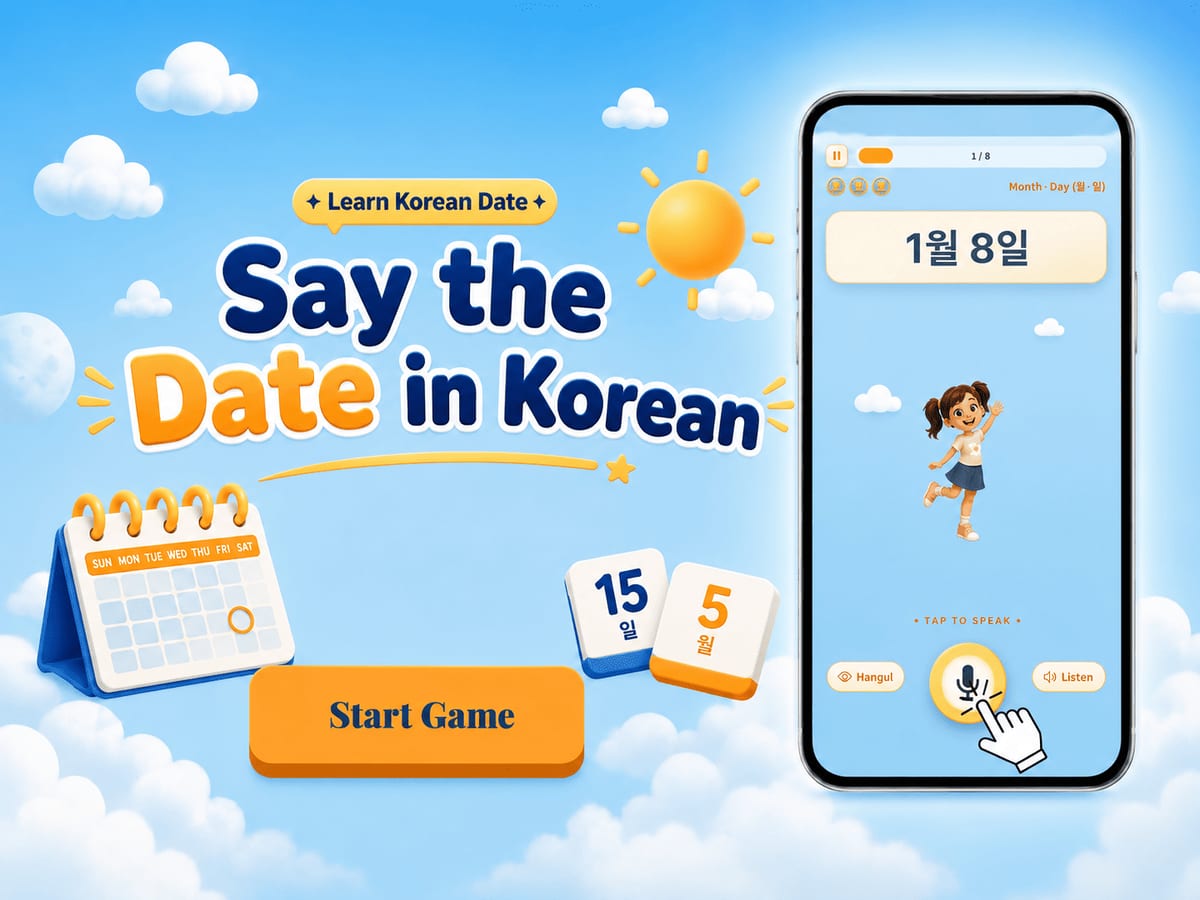
Reading about it is one thing, but saying Korean dates out loud is where it really clicks. That is exactly why we built a little game called Korean Date Master.
A date appears on the calendar, you say it out loud in Korean, and you practice at your own pace, with zero pressure to be perfect. It is a gentle, fun way to make saying dates feel natural. Give it a try, and the next time someone asks 오늘 며칠이에요? ("What's the date today?"), the answer will already be on your tongue. 😊